AI in Dental Radiograph Interpretation: Evidence-Based Guide for Clinical Practice
Comprehensive evidence-based guide on artificial intelligence applications in dental radiograph interpretation. Learn about diagnostic accuracy, clinical workflows, and integration strategies for dental practices.

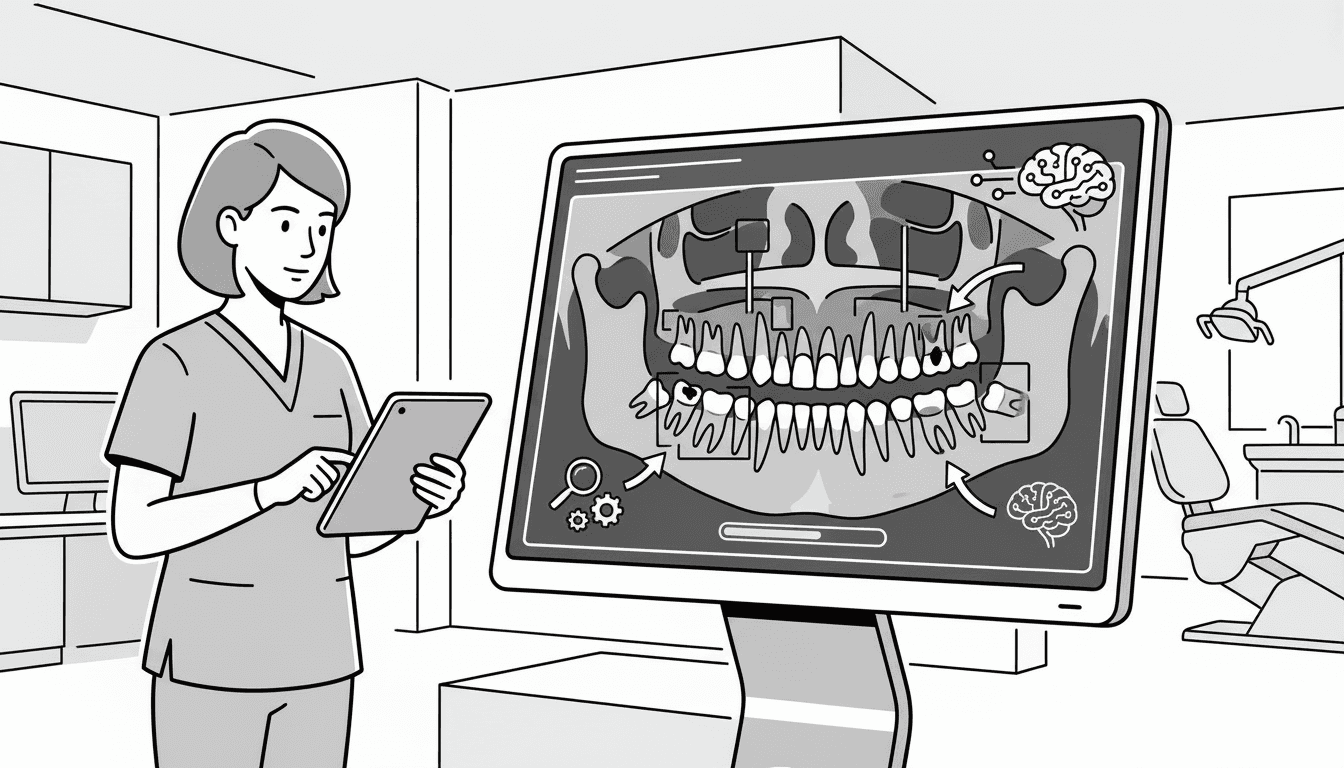
AI in Dental Radiograph Interpretation: Evidence-Based Guide for Clinical Practice
Artificial intelligence (AI) has emerged as one of the most transformative technologies in modern dentistry, with radiograph interpretation representing its most mature and clinically relevant application. As dental practices navigate an increasingly digital landscape, understanding the evidence supporting AI-assisted diagnosis—and its practical implications for patient care—has become essential for clinicians seeking to optimize diagnostic accuracy while maintaining the highest standards of evidence-based practice.
The Evolution of AI in Dental Imaging
The integration of artificial intelligence into dental radiology represents the convergence of decades of computational advancement with the growing digitization of dental practices. Unlike earlier computer-aided detection systems that relied on rule-based algorithms, modern AI applications in dentistry utilize deep learning—specifically convolutional neural networks (CNNs)—that can learn complex patterns directly from imaging data without explicit programming of diagnostic criteria.
This paradigm shift has been enabled by three converging factors: the widespread adoption of digital radiography systems in dental practices, the exponential growth in computational power necessary to train complex neural networks, and the accumulation of large, annotated datasets of dental images suitable for machine learning training. Together, these developments have created the foundation for AI systems that can approach—or in some cases exceed—human-level diagnostic performance for specific radiographic findings.
Current Applications and Diagnostic Accuracy
Caries Detection
Dental caries detection on bitewing and periapical radiographs represents one of the most extensively validated applications of AI in dental imaging. Multiple systematic reviews and meta-analyses have examined the diagnostic performance of deep learning models for approximal and occlusal caries identification.
A 2023 systematic review and meta-analysis examining CNN-based caries detection found pooled sensitivity values ranging from 0.82 to 0.94 and specificity values from 0.85 to 0.97 across various studies, depending on the caries depth and radiographic view analyzed. These performance metrics suggest that AI systems can serve as reliable adjuncts for caries screening, particularly for identifying lesions that may be overlooked during routine interpretation.
Importantly, AI demonstrates particular strength in detecting early enamel lesions that often escape visual detection, potentially enabling more conservative, preventive interventions rather than restorative treatment. However, the clinical significance of detecting incipient lesions that may never progress remains an active area of investigation, with implications for overtreatment risk.
Periodontal Bone Loss Assessment
Periodontal disease diagnosis through assessment of alveolar bone levels on periapical and panoramic radiographs has shown promising results with AI implementation. Convolutional neural networks trained on annotated radiographs can identify crestal bone levels, calculate bone loss percentages, and classify periodontal disease severity according to established criteria.
Research published in 2024 demonstrated that AI systems achieved inter-examiner agreement comparable to experienced periodontists when assessing bone loss on panoramic radiographs, with correlation coefficients exceeding 0.85 for bone level measurements. These findings suggest potential applications for AI in periodontal screening, particularly in general practice settings where comprehensive periodontal charting may not be routinely performed.
Periapical Pathology Identification
The detection of periapical radiolucencies associated with endodontic pathology has emerged as another validated AI application. Periapical lesions, particularly in their early stages, can be subtle and easily overlooked, especially when superimposed over anatomical structures.
Studies evaluating AI performance for periapical lesion detection have reported diagnostic accuracies ranging from 87% to 96%, with sensitivity values particularly high for established lesions larger than 3mm in diameter. The technology shows promise for endodontic treatment planning and outcome assessment, though challenges remain in distinguishing periapical lesions from other radiolucent entities such as anatomical radiolucencies or benign fibro-osseous lesions.
Root Canal Morphology Analysis
AI applications in endodontics extend beyond pathology detection to include analysis of root canal morphology on preoperative radiographs and CBCT scans. Machine learning algorithms can identify root canal number, configuration, curvature, and apical morphology—information critical for treatment planning and instrumentation selection.
Recent validation studies have shown AI accuracy exceeding 90% for canal number identification on CBCT scans, with particular utility in detecting missed canals that might compromise endodontic outcomes. This application addresses a well-documented challenge in endodontics, where untreated canal branches represent a significant cause of treatment failure.
Impacted Tooth and Pathology Screening
Panoramic radiograph interpretation for impacted teeth, cysts, tumors, and other pathologies represents a natural application for AI given the complexity and time-intensive nature of comprehensive panoramic analysis. AI systems can flag regions of interest for clinician review, potentially reducing the incidence of missed pathology.
Studies examining AI performance for odontogenic cyst and tumor detection have reported sensitivity values between 85% and 93%, though specificity remains more variable across different pathological entities. The technology shows particular promise for routine screening applications where systematic analysis of all anatomical regions may not be consistently performed.
Clinical Workflow Integration
Real-Time Decision Support
The integration of AI into clinical radiology workflows represents a significant departure from traditional diagnostic paradigms. Rather than replacing clinician judgment, contemporary AI systems function as decision support tools, providing real-time annotations and probability assessments that inform—but do not dictate—clinical decision-making.
This workflow integration typically occurs through direct integration with practice management software and radiology systems, allowing AI analysis to occur automatically when radiographs are acquired. Findings are presented as annotated images with highlighted regions of interest, accompanied by confidence scores that reflect the algorithm's certainty in its assessment.
Quality Assurance Applications
Beyond individual patient diagnosis, AI systems offer opportunities for practice-wide quality assurance. Automated analysis of radiograph quality—including assessments of exposure, positioning, and artifacts—can provide immediate feedback to operators, enabling real-time quality improvement.
Additionally, retrospective analysis of diagnostic accuracy through AI-assisted chart review may identify systematic errors or knowledge gaps requiring targeted continuing education, though the implementation of such quality assurance programs raises important considerations regarding professional autonomy and liability.
Patient Communication Enhancement
The visual nature of AI annotations—highlighting specific regions of concern with bounding boxes or heat maps—provides powerful communication tools for patient education. Patients can visualize the basis for diagnostic recommendations, potentially improving understanding and acceptance of treatment plans.
Research examining patient acceptance of AI-assisted diagnosis has generally shown positive attitudes, with patients reporting increased confidence in diagnoses when AI confirmation is provided. However, these findings must be balanced against the risk of creating unrealistic expectations regarding AI capabilities or undermining trust should AI predictions prove inaccurate.
Evidence Limitations and Critical Appraisal
Despite promising performance metrics, several limitations must inform clinical decision-making regarding AI implementation:
Dataset Bias and Generalizability
AI systems trained on specific populations may exhibit reduced accuracy when applied to patients from different demographic groups, geographic regions, or disease prevalence settings. Most validation studies have been conducted on datasets dominated by specific populations, raising concerns about generalizability to diverse patient bases.
Clinicians should critically appraise the training data underlying any AI system under consideration, ensuring that demographic and clinical characteristics align with their patient population. Manufacturers should provide transparency regarding training dataset composition and performance metrics stratified by relevant patient characteristics.
Gold Standard Limitations
AI validation typically relies on comparison with expert consensus or histopathological confirmation as the gold standard. However, inherent variability in human interpretation—even among experts—creates fundamental uncertainty in establishing true diagnostic accuracy. The absence of a perfect gold standard complicates performance assessment and may overestimate AI capabilities when human experts themselves disagree.
Spectrum Bias
Many validation studies utilize datasets enriched with pathological findings to maximize statistical power, potentially creating spectrum bias that overestimates real-world performance. AI systems may demonstrate lower accuracy when applied to screening populations with lower disease prevalence, a phenomenon well-documented in medical imaging AI literature.
Explainability and the "Black Box" Problem
Deep learning systems function as "black boxes," with decision-making processes that resist simple interpretation. While attention maps and visualization techniques provide some insight into which image regions influence AI predictions, the specific features driving classification decisions often remain opaque.
This limited explainability creates challenges for clinical trust and medicolegal accountability. When AI predictions conflict with clinical judgment, the inability to articulate the basis for algorithmic decisions complicates resolution of discrepancies and may create liability concerns.
Regulatory Landscape and Compliance
The regulatory framework for AI in dental imaging continues evolving as health authorities grapple with the unique challenges posed by machine learning-based medical devices. In the United States, FDA clearance for dental AI software typically occurs through the 510(k) pathway, with most systems classified as Class II medical devices requiring premarket notification.
European Union regulation under the Medical Device Regulation (MDR) similarly classifies diagnostic AI software as medical devices, requiring CE marking and conformity assessment by notified bodies. The upcoming European Artificial Intelligence Act will introduce additional requirements for high-risk AI applications in healthcare, including dental diagnostic systems.
Clinicians should verify regulatory clearance status before implementing any AI system and maintain awareness of evolving compliance requirements. Software marketed as "research use only" or "for educational purposes" should not be utilized for clinical decision-making without appropriate regulatory authorization.
Implementation Considerations for Dental Practices
Cost-Benefit Analysis
The financial investment in AI radiology software—including licensing fees, integration costs, and ongoing maintenance—must be weighed against anticipated benefits. While improved diagnostic accuracy may reduce liability exposure and enable more conservative treatment approaches, quantifying return on investment remains challenging given limited long-term outcome data.
Practices should consider patient volume, case complexity, and existing diagnostic error rates when evaluating AI implementation. High-volume practices with complex restorative and endodontic caseloads may realize greater benefit than practices focused primarily on routine preventive care.
Staff Training and Workflow Adaptation
Effective AI integration requires comprehensive staff training extending beyond software operation to include interpretation of AI outputs, recognition of AI limitations, and appropriate communication with patients regarding AI involvement in their care.
Workflow adaptation may be necessary to incorporate AI analysis into existing radiology protocols, particularly regarding the timing of AI review relative to clinician interpretation and patient consultation. Clear policies should address how AI findings are documented, communicated, and acted upon.
Data Privacy and Security
AI radiology systems typically involve cloud-based processing, raising important data privacy considerations. Practices must ensure compliance with HIPAA (in the United States), GDPR (in Europe), or applicable local regulations regarding protected health information transmission and storage.
Data processing agreements with AI vendors should clearly specify data handling practices, retention policies, and breach notification procedures. Practices should understand whether de-identified data may be utilized for algorithm improvement or research purposes.
Future Directions
The field of AI in dental radiology continues to evolve rapidly, with several emerging trends likely to shape clinical practice in coming years:
Multimodal Integration
Future AI systems will likely integrate radiographic findings with clinical examination data, patient history, and laboratory values to provide comprehensive diagnostic assessments. This multimodal approach more closely mirrors clinical decision-making and may address limitations of radiograph-only analysis.
Predictive Analytics
Beyond diagnostic classification, AI systems are being developed to predict treatment outcomes, disease progression, and treatment complexity. Such predictive capabilities could inform treatment planning, referral decisions, and patient counseling with individualized risk assessments.
Federated Learning
Privacy-preserving machine learning techniques such as federated learning may enable AI improvement across diverse practice settings without centralizing sensitive patient data. This approach could accelerate algorithm development while maintaining data security and regulatory compliance.
Conclusion
Artificial intelligence in dental radiograph interpretation represents a maturing technology with demonstrated diagnostic capabilities across multiple applications. The evidence supports AI implementation as an adjunct to—not replacement for—clinical expertise, with particular value in screening applications, quality assurance, and patient communication.
Clinicians considering AI adoption should critically appraise validation studies, assess regulatory compliance, and develop implementation strategies addressing workflow integration, staff training, and data privacy. As the evidence base continues to grow and regulatory frameworks mature, AI-assisted radiology will likely become standard of care in dental practice.
The fundamental principle guiding AI implementation should remain unchanged: technology serves to enhance clinician decision-making and patient outcomes, not to substitute for professional judgment and the human relationship at the heart of dental care.
References
-
Schwendicke F, Samek W, Krois J. Artificial intelligence in dentistry: chances and challenges. J Dent Res. 2020;99(7):769-774. doi:10.1177/0022034520915714
-
Krois J, Ekert T, Meinhold L, et al. Deep learning for the radiographic detection of periodontal bone loss. Sci Rep. 2019;9(1):8495. doi:10.1038/s41598-019-44839-3
-
Lee JH, Kim DH, Jeong SN, Choi SH. Detection and diagnosis of dental caries using a deep learning-based convolutional neural network algorithm. J Dent. 2018;77:106-111. doi:10.1016/j.jdent.2018.07.015
-
Hiraiwa T, Ariji Y, Fukuda M, et al. A deep-learning artificial intelligence system for assessment of root morphology of the mandibular first molar on panoramic radiography. Dentomaxillofac Radiol. 2019;48(3):20180218. doi:10.1259/dmfr.20180218
-
Orhan K, Bayrakdar IS, Ezhov M, et al. A comparison of deep learning and conventional machine learning methods for the detection of proximal caries on periapical radiographs: A systematic review and meta-analysis. Oral Surg Oral Med Oral Pathol Oral Radiol. 2022;134(6):741-752. doi:10.1016/j.oooo.2022.07.012
-
Kühnisch J, Meyer O, Hesenius M, et al. Caries detection on intraoral images using artificial intelligence. J Dent Res. 2022;101(2):158-165. doi:10.1177/00220345211027576
-
Srivastava N, Chen C, Pydi SP, et al. Explainable AI for dental caries detection in bitewing radiographs. Artif Intell Med. 2023;138:102513. doi:10.1016/j.artmed.2023.102513
-
Chaurasia V, Saha S, Sanyal N. Deep learning for diagnosis of dental conditions: A systematic review. Imaging Sci Dent. 2023;53(2):109-124. doi:10.5624/isd.20230004
-
Poedjiastoeti W, Suebnukarn S. Application of convolutional neural network in the diagnosis of jaw tumors. Healthc Inform Res. 2018;24(3):236-241. doi:10.4258/hir.2018.24.3.236
-
Yüksel K, Bayrakdar IS, Çelik Ö, et al. Artificial intelligence-based evaluation of anesthesia-induced changes in tongue position and upper airway dimensions on lateral cephalometric radiographs. Oral Radiol. 2023;39(1):144-152. doi:10.1007/s11282-022-00608-5
Published March 12, 2026. This article is for educational purposes and does not constitute professional dental advice. Consult appropriate specialists for clinical decision-making.