Endodontic Retreatment vs Implant Placement: Evidence-Based Decision Matrix for Clinical Practice
Comprehensive evidence-based decision matrix comparing endodontic retreatment versus dental implant placement. Clinical outcomes, success rates, risk factors, and patient-centered considerations for optimal treatment planning.

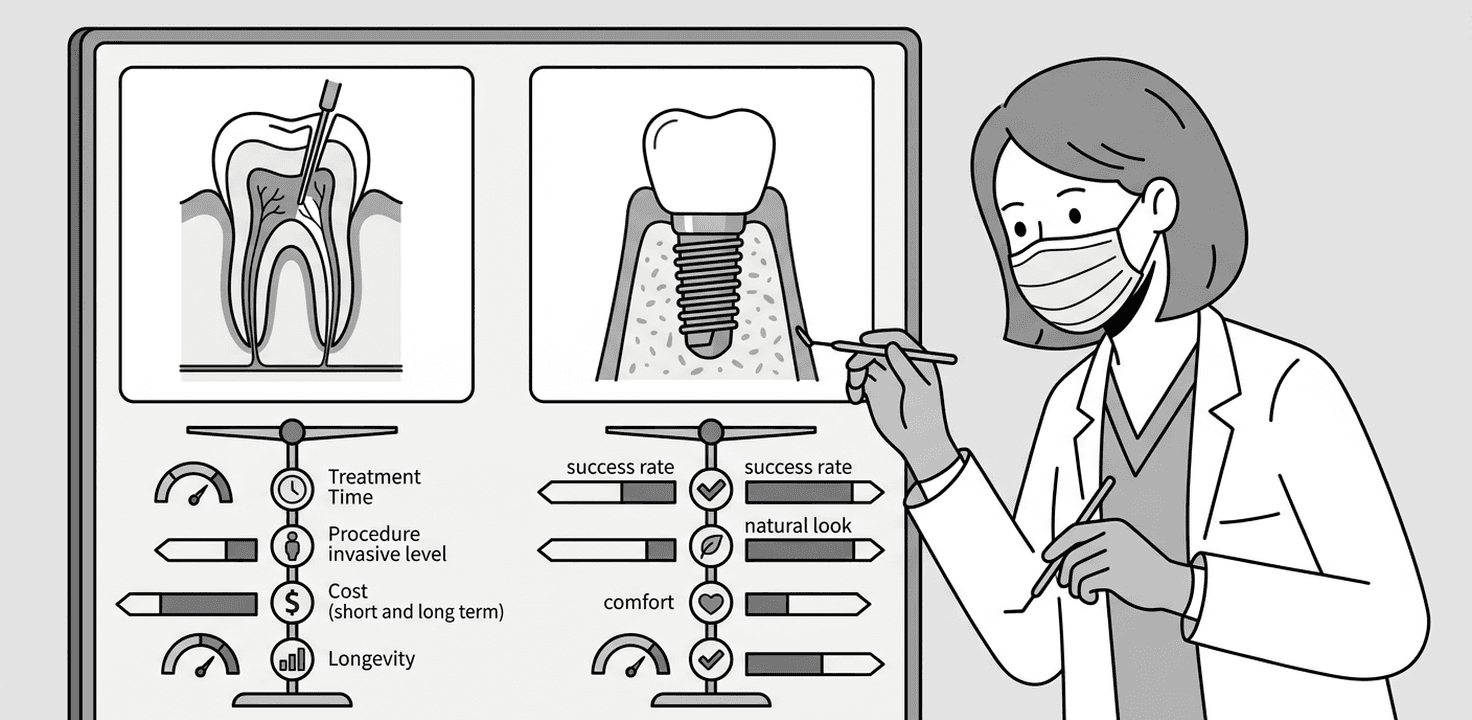
Endodontic Retreatment vs Implant Placement: Evidence-Based Decision Matrix for Clinical Practice
The decision to pursue endodontic retreatment versus extraction and implant placement represents one of modern dentistry's most consequential clinical dilemmas. When faced with a failing endodontically treated tooth, clinicians must navigate a complex interplay of biological, mechanical, economic, and patient-centered factors to determine the optimal pathway. This evidence-based decision matrix provides a systematic framework for evaluating these treatment alternatives based on current research, long-term outcome data, and practical clinical considerations.
Understanding the Clinical Dilemma
The contemporary dental landscape presents practitioners with increasingly sophisticated options for managing compromised teeth. Endodontic retreatment offers the preservation of natural tooth structure, proprioception, and periodontal ligament function, while implant placement provides a de novo solution free from the biological liabilities that may have compromised the original tooth.
This decision is not merely technical—it carries profound implications for patient function, aesthetics, long-term prognosis, and quality of life. The choice between these modalities should therefore emerge from a rigorous evidence-based assessment rather than operator preference or commercial influence.
Outcome Data: Separating Survival from Success
A critical challenge in comparing endodontic retreatment and implant outcomes lies in understanding the distinction between "survival" and "success" criteria. Endodontic literature traditionally employs strict radiographic and clinical criteria for success, including complete resolution of periapical radiolucency and absence of symptoms. Implant studies, conversely, frequently report "survival" rates that may include cases with peri-implant bone loss, soft tissue complications, or technical complications requiring intervention.
Survival Rates: Comparable Longevity
Large-scale systematic reviews and cohort studies demonstrate comparable survival rates between endodontically treated teeth and single-tooth implants over intermediate follow-up periods. A landmark systematic review analyzing over 1.4 million endodontically treated teeth reported 8-year survival rates of 97% for primary root canal treatment, while matched studies of single-tooth implants demonstrate 10-year survival rates of 92-96%.
A 2025 systematic review comparing root canal therapy and dental implants across 12 studies found both modalities demonstrated high survival rates (>95% at 5 years), with no statistically significant differences in failure rates between treatments. The estimated survival ranges from 0.7% to 12% across various studies, reflecting the influence of patient selection, operator experience, and case complexity.
Success Rates: Nuanced Differences
When applying stricter success criteria, the comparison becomes more complex. Primary endodontic treatment achieves success rates of 85-93%, while nonsurgical retreatment demonstrates success rates of 77-83% in systematic reviews. Surgical endodontic retreatment shows wider variability (63-91%), heavily influenced by surgical technique, magnification, and case selection.
Single-tooth implants demonstrate success rates of 90-97% in meta-analyses when applying Albrektsson criteria (absence of mobility, no peri-implant radiolucency, <0.2 mm annual bone loss after year one). However, applying comparable strict criteria reveals that implant success rates drop significantly, with some studies reporting true success rates as low as 75.6% versus survival rates of 95.6%.
The Reality of Complications
Perhaps the most significant differentiator between modalities lies not in terminal failure rates but in the frequency and nature of complications requiring intervention. Multiple comparative studies demonstrate that implants are associated with significantly higher rates of postoperative interventions and complications compared to endodontically treated teeth.
A University of Minnesota case-control study matched 196 single-tooth implants with 196 endodontically treated teeth and followed them for 7-9 years. While survival rates were comparable, implants required intervention in 17.9% of cases versus only 3.6% for endodontic treatment. Reintervention rates showed even more dramatic differences: 12.4% for implants versus 1.3% for endodontic retreatment.
The Decision Matrix: Clinical Factors
Factors Favoring Endodontic Retreatment
Adequate Remaining Tooth Structure The fundamental prerequisite for predictable endodontic retreatment is sufficient remaining coronal and radicular tooth structure to support a definitive restoration. Teeth with ≥2 remaining dentine walls, absence of deep carious lesions extending subgingivally, and reasonable crown-to-root ratios are strong candidates for retention.
Research demonstrates that insufficient crown structure represents the major parameter associated with root fracture in endodontically treated teeth. However, contemporary fiber post systems, core buildup materials, and ferrule-providing restorations have substantially improved the prognosis of compromised teeth previously considered unrestorable.
Correctable Etiology Retreatment is strongly indicated when the cause of failure is correctable: inadequate previous obturation, missed canals, coronal leakage due to temporary restorations, or iatrogenic errors such as ledges or separated instruments in accessible locations. These cases demonstrate significantly higher success rates (86.8%) compared to cases with altered canal anatomy or non-negotiable obstructions (47%).
Anatomical Considerations Anterior teeth and premolars generally demonstrate higher retreatment success rates than multi-rooted molars. The anatomical difficulties of molars—including curved roots, limited access, and complex canal configurations—contribute to reduced predictability. However, contemporary techniques including operating microscopy, ultrasonics, and enhanced visualization have narrowed this gap.
Periodontal Status Teeth with healthy periodontal support and minimal attachment loss show superior retreatment outcomes. Preoperative crestal bone levels and absence of combined endodontic-periodontic lesions are positive prognostic indicators.
Factors Favoring Implant Placement
Non-Correctable Etiology When failure results from untreatable factors—vertical root fractures, severe canal transportation preventing renegotiation, or extensive perforations with poor location and timing—implant replacement becomes the logical alternative. These cases have predictably poor retreatment outcomes and may pose ongoing risks to adjacent structures.
Severe Coronal Destruction Teeth with insufficient ferrule (< 1.5 mm), extensive subgingival caries, or inadequate crown-to-root ratios may present better implant candidates despite technical feasibility of retreatment. The long-term prognosis of the restored tooth must be weighed against the predictability of implant rehabilitation.
Patient Risk Factors Smoking, uncontrolled diabetes, and advanced periodontal disease significantly compromise both treatment modalities but may tilt the balance toward implant placement in certain scenarios. However, recent research indicates that after adjusting for baseline health factors, there is no statistically significant difference in survival between retreatment and re-implantation—suggesting that patient risk factors matter more than the specific procedure chosen.
Strategic Considerations In complex restorative cases where the questionable tooth would serve as a bridge abutment, implant replacement may be preferred to prevent future compromise of the entire prosthesis. The risk of losing a multi-unit restoration often outweighs the benefits of attempting to retain a single compromised tooth.
Patient-Centered Considerations
Treatment Experience and Time
Endodontic retreatment generally requires fewer appointments and shorter total treatment time compared to implant placement. A randomized controlled trial comparing the two modalities found that implant rehabilitation required an average of 191 days to completion versus 61 days for endodontic retreatment. For patients seeking rapid resolution or facing time constraints, this difference may be significant.
Cost Considerations
Economic analyses consistently demonstrate higher initial costs for implant rehabilitation compared to endodontic retreatment with coronal restoration. However, long-term cost-effectiveness analyses must account for the higher complication and maintenance rates associated with implants. When factoring in the potential need for peri-implantitis treatment, prosthetic complications, and component replacements, the lifetime cost differential may narrow or reverse depending on the time horizon and patient risk profile.
Patient-Reported Outcomes
Systematic reviews examining patient-reported outcomes—including pain levels, satisfaction, oral health-related quality of life (OHIP scores), and functional adaptation—demonstrate comparable results between endodontically treated teeth and implants. Contrary to assumptions that implants represent "replacement" of natural teeth, studies show similar satisfaction levels and functional outcomes between modalities.
Interestingly, patients with endodontically treated teeth often report superior proprioception and occlusal feedback compared to implant patients, who may require extended adaptation periods. The preservation of periodontal mechanoreceptors in natural teeth provides sensory input that implant-supported prostheses cannot replicate.
The Role of Endodontic Microsurgery
Contemporary endodontic microsurgery using operating microscopes, ultrasonic root-end preparation, and biocompatible materials such as MTA has substantially improved outcomes for cases where nonsurgical retreatment is contraindicated. Systematic reviews of modern microsurgical techniques report success rates of 91-94% for carefully selected cases, challenging the notion that surgical intervention represents an inferior alternative to implant placement.
Microsurgery should be considered when:
- Previous high-quality endodontic treatment limits nonsurgical retreatment options
- Canal obstruction prevents orthograde renegotiation
- Biopsy of periapical tissue is indicated
- Patient factors favor preservation of the natural tooth
Evidence-Based Treatment Planning Algorithm
Step 1: Evaluate Restorability Assess remaining tooth structure, crown-to-root ratio, periodontal support, and strategic value. If unrestorable, proceed to extraction and implant evaluation.
Step 2: Identify Etiology of Failure Determine whether the cause of failure is correctable through retreatment. Inadequate obturation, missed canals, and coronal leakage favor retreatment; vertical fractures and non-negotiable obstructions favor extraction.
Step 3: Assess Anatomical Complexity Evaluate root morphology, canal configuration, and accessibility. Complex anatomy does not preclude retreatment but may necessitate referral to specialists with appropriate armamentarium.
Step 4: Consider Patient Factors Systemic health, risk factors (smoking, diabetes), patient preferences, financial constraints, and treatment timeframes influence decision-making.
Step 5: Estimate Prognosis Based on evidence-based predictors, estimate retreatment success probability. If prognosis is guarded (< 70% estimated success), discuss implant alternative.
Step 6: Shared Decision-Making Present risks, benefits, and alternatives to the patient. Document informed consent discussion, including the evidence that both modalities offer viable long-term solutions.
Clinical Recommendations
The current evidence supports the following clinical approach:
-
Prioritize tooth preservation when prognosis is favorable. Endodontic retreatment or microsurgery should be the first consideration for failing endodontically treated teeth with correctable etiology and adequate restorative prognosis.
-
Recognize that implants are not superior to natural teeth. Marketing and commercial influences have created perceptions that implants represent "upgrade" solutions. Evidence demonstrates comparable outcomes with higher intervention rates for implants.
-
Focus on patient-specific risk factors. Diabetes, smoking, and periodontal status are stronger predictors of treatment failure than the specific procedure chosen. Risk factor modification should accompany either treatment pathway.
-
Emphasize restoration quality. For endodontically treated teeth, the quality of the coronal restoration is as important as the endodontic procedure itself. Teeth with high-quality definitive restorations demonstrate survival rates comparable to implants.
-
Develop appropriate referral networks. Complex retreatment cases warrant referral to endodontic specialists with operating microscopes, advanced imaging, and microsurgical capabilities. The expertise of the operator significantly influences outcomes.
Future Directions
Emerging technologies continue to influence this treatment decision landscape. Three-dimensional printing of custom endodontic files, dynamic navigation systems for precise canal location, and advanced obturation materials promise to improve retreatment outcomes. Simultaneously, developments in implant surface technology, digital workflow integration, and peri-implantitis management may alter the risk-benefit calculus for implant replacement.
Long-term outcome studies extending beyond 10-15 years remain essential, as both treatment modalities demonstrate evolving complication profiles over extended follow-up periods. The development of predictive risk models incorporating artificial intelligence may eventually enable personalized treatment recommendations based on individual patient characteristics and case-specific factors.
Conclusion
The decision between endodontic retreatment and implant placement should emerge from systematic evidence-based evaluation rather than default patterns or commercial influence. Current research demonstrates that both modalities offer high success rates and favorable patient-reported outcomes, with the choice between them hinging on case-specific clinical factors rather than inherent superiority of one approach.
Endodontic retreatment of carefully selected cases achieves success rates exceeding 80-90%, preserves natural tooth function, and demonstrates lower complication rates than implants. Implant placement provides a predictable alternative when tooth preservation is not feasible or advisable. The guiding principle should remain the least invasive approach that achieves the patient's long-term functional and aesthetic goals.
As the evidence base continues to evolve, clinicians must maintain currency with outcome literature, critically appraise commercial claims, and engage patients in genuine shared decision-making that respects both the value of natural tooth preservation and the legitimate role of implant rehabilitation when indicated.
References
-
Sphorer T, Lourenco R, Vala F, Delgado AS, Messias A, Alves R. Comparative outcomes of endodontically treated teeth versus dental implants: A systematic review and meta-analysis. BMC Oral Health. 2025;25(1):e12239130. doi:10.1186/s12903-025-06242-1
-
Doyle SL, Hodges JS, Pesun IJ, Law AS, Bowles WR. Retrospective cross sectional comparison of initial nonsurgical endodontic treatment and single-tooth implants. J Endod. 2006;32(9):822-827. doi:10.1016/j.joen.2006.03.010
-
Hannahan JP, Eleazer PD. Comparison of success of implants versus endodontically treated teeth. J Endod. 2008;34(11):1302-1305. doi:10.1016/j.joen.2008.08.007
-
Iqbal MK, Kim S. For teeth requiring endodontic treatment, what are the differences in outcomes of restored endodontically treated teeth compared to implant-supported restorations? Int J Oral Maxillofac Implants. 2007;22(Suppl):96-116.
-
Salehrabi R, Rotstein I. Endodontic treatment outcomes in a large patient population in the USA: An epidemiological study. J Endod. 2004;30(12):846-850. doi:10.1097/01.don.0000145031.04236.e8
-
Setzer FC, Kohli MR, Shah SB, Karabucak B, Kim S. Outcome of endodontic surgery: A meta-analysis of the literature—part 1: Comparison of traditional root-end surgery and endodontic microsurgery. J Endod. 2010;36(11):1757-1765. doi:10.1016/j.joen.2010.08.007
-
Torabinejad M, Anderson P, Bader J, et al. Outcomes of root canal treatment and restoration, implant-supported single crowns, fixed partial dentures, and extraction without replacement: A systematic review. J Prosthet Dent. 2007;98(4):285-311. doi:10.1016/S0022-3913(07)60105-7
-
Elemam RF, Pretty IA. Comparison of the success rate of endodontic treatment and implant treatment. ISRN Dent. 2011;2011:640509. doi:10.5402/2011/640509
-
Esposito M, Cioli L, Barausse C, et al. Endodontic retreatment versus dental implants: A 5-year randomised trial. Clin Trials Dent. 2020;2(3):27-43. doi:10.36437/CTD.2020.002.03.001
-
Lee HH, Yoon JH, Kim MJ, et al. Survival and complication rates of endodontic treatments vs. single-tooth implants: A retrospective cohort study. J Clin Med. 2022;11(15):4362. doi:10.3390/jcm11154362
-
Ng YL, Mann V, Rahbaran S, Lewsey J, Gulabivala K. Outcome of primary root canal treatment: Systematic review of the literature—part 1. Effects of study characteristics on probability of success. Int Endod J. 2007;40(12):921-939. doi:10.1111/j.1365-2591.2007.01322.x
-
Del Fabbro M, Corbella S, Sequeira-Byron P, et al. Endodontic procedures for retreatment of periapical lesions. Cochrane Database Syst Rev.