Managing Dental Anxiety: Sedation Protocols and Chairside Communication
Learn evidence-based strategies for managing dental anxiety—from MDAS assessment and the Four A's of communication to nitrous oxide, oral midazolam, and IV sedation protocols.

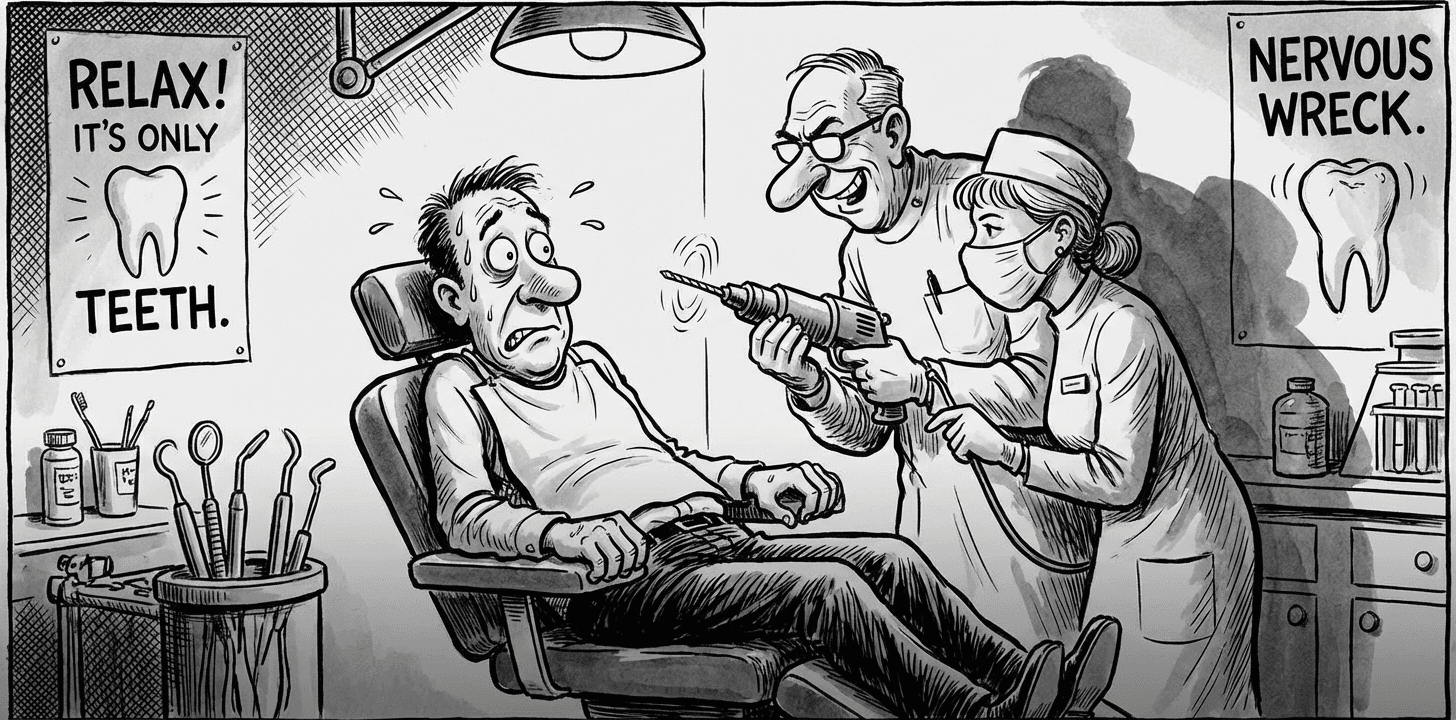
Dental anxiety affects approximately 25% of the general population, with 12% exhibiting phobic levels that significantly impair treatment acceptance12. For practicing dentists, managing anxious patients is not merely a matter of comfort—it directly impacts treatment outcomes, appointment efficiency, and long-term patient retention. This article synthesizes current evidence-based approaches to dental anxiety management, focusing on the dual pillars of pharmacological sedation protocols and chairside communication strategies.
Assessing Anxiety: The Foundation of Effective Management
Before selecting an intervention, accurate assessment is essential. The Modified Dental Anxiety Scale (MDAS) remains the gold standard for quantifying trait anxiety in adult patients2. Scoring ranges from 5–25, with 5–10 indicating mild anxiety, 10–18 moderate, and scores above 19 suggesting severe anxiety or phobia requiring specialized intervention.
Beyond standardized questionnaires, clinicians should assess state anxiety triggers specific to the appointment. Common provocations include local anesthetic injections (often feared independently of general dental anxiety), the dental handpiece, and clinical environment factors2. Understanding whether a patient experiences generalized trait anxiety or specific situational triggers informs your management strategy.
Chairside Communication: The First Line of Defense
The Four A's Framework
Effective communication serves as the foundation of anxiety management. Research emphasizes the "Four A's" approach: Ask, Assess, Acknowledge, and Address3. Contrary to concerns that discussing anxiety exacerbates it, studies demonstrate that patients prefer dentists who are aware of their fears, and acknowledging anxiety significantly reduces physiological stress responses34.
Key communication techniques include:
- Reflective listening: Paraphrasing patient concerns to ensure they feel heard rather than dismissed
- Avoiding false reassurance: Statements like "Don't worry" are ineffective and may increase patient distress3. Instead, provide specific, procedural information
- Shared control: Establishing stop signals and involving patients in treatment decisions enhances perceived autonomy
- Patient-centered pacing: Allowing patients to set the tempo of disclosure and treatment progression4
Behavioral Techniques
For patients with mild to moderate anxiety, non-pharmacological interventions offer effective alternatives. Progressive relaxation combined with guided imagery has demonstrated efficacy in reducing physiological arousal3. Distraction techniques, while suitable for mild anxiety, should not replace empathetic communication for moderate to severe cases.
Sedation Protocols: Evidence-Based Selection
When behavioral strategies prove insufficient, pharmacological sedation becomes necessary. Recent randomized controlled trials and systematic reviews provide clear guidance on selecting appropriate agents.
Nitrous Oxide/Oxygen Inhalation
Nitrous oxide remains the most widely used sedation modality in general practice, offering a favorable safety profile and rapid onset/offset characteristics56. A recent systematic review analyzing 1,809 records found nitrous oxide equally effective as alternative sedatives regarding patient satisfaction and procedural success, with the added benefits of minimal cardiorespiratory depression and rapid recovery6.
Clinical advantages:
- Onset within 2–5 minutes with titratable depth
- Maintenance of protective airway reflexes
- Suitable for ASA I and II patients, including pediatric populations7
- No requirement for fasting in most jurisdictions (though local guidelines should be consulted)
Oral Midazolam
Oral midazolam (0.25–1.0 mg/kg, maximum 20 mg) provides an effective option for moderate anxiety, particularly in pediatric dentistry or when needle avoidance is prioritized8. A recent RCT comparing sedation modalities found oral midazolam exhibited the fewest adverse effects (primarily mild drowsiness) compared to nitrous oxide and IV sedation1.
However, onset is significantly slower (12.7 ± 2.3 minutes) than IV alternatives, and anxiolytic effects, while substantial (6.2-point reduction on VAS), are less pronounced than intravenous administration1.
Intravenous Sedation
IV midazolam (typically 0.07 mg/kg titrated) offers the fastest onset (3.4 ± 0.8 minutes) and highest anxiety reduction (7.8-point VAS reduction)1. Patient satisfaction rates reach 92%, the highest among common modalities1.
Safety considerations:
- 10% incidence of transient respiratory depression requires continuous monitoring1
- Mandatory fasting protocols and recovery supervision
- Contraindicated in patients with severe respiratory conditions without anesthesia support
- Requires specific training and emergency equipment per IACSD and Academy of Medical Royal Colleges guidelines2
Selecting the Appropriate Protocol
The choice between sedation methods should follow a tiered approach based on anxiety severity, medical status, and procedural complexity2:
Tier 1 (Mild-Moderate Anxiety, ASA I/II):
- Behavioral techniques + nitrous oxide
- Oral midazolam for needle-phobic patients requiring deeper sedation
Tier 2 (Moderate-Severe Anxiety, Complex Treatment):
- IV sedation with midazolam
- Consider combination protocols (nitrous oxide + oral/IV agents) for prolonged procedures
Tier 3 (Phobic/Severe Systemic Disease):
- Referral to specialist services for cognitive behavioral therapy (CBT) or general anesthesia
Practical Implementation
Pre-appointment preparation:
- Provide informational materials explaining sedation options (evidence shows pre-appointment communication reduces baseline anxiety)4
- Complete MDAS screening during medical history updates
- Establish clear fasting instructions when pharmacological sedation is anticipated
Intraoperative monitoring:
- Maintain verbal contact throughout conscious sedation (defined as the ability to respond appropriately to verbal commands)2
- Monitor respiratory function continuously during IV sedation
- Document anxiety scores pre- and post-sedation for quality assurance
Postoperative care:
- Ensure adequate recovery time (nitrous oxide allows rapid discharge; oral/IV sedation requires escort protocols)
- Provide written post-sedation instructions
- Schedule follow-up to reinforce positive experiences and prevent relapse into avoidance behaviors
Conclusion
Effective management of dental anxiety requires integrating empathic communication with appropriate pharmacological intervention. While IV sedation offers superior anxiolytic efficacy for severe cases, nitrous oxide and oral midazolam provide safer alternatives for moderate anxiety with fewer systemic risks16. Ultimately, the goal extends beyond completing the immediate procedure to establishing long-term dental attendance patterns. By combining evidence-based sedation protocols with patient-centered communication, clinicians can transform anxious patients into compliant, regular attendees.
References
Footnotes
-
Safety and Efficacy of Different Sedation Protocols in Managing Dental Anxiety in Adult Patients: A Randomized Controlled Trial. Cureus. 2026;18(1). Available at: https://pmc.ncbi.nlm.nih.gov/articles/PMC12156648/ ↩ ↩2 ↩3 ↩4 ↩5 ↩6 ↩7
-
NHS England. Clinical standards for dental anxiety management. Published January 17, 2023; updated July 19, 2024. Available at: https://www.england.nhs.uk/long-read/clinical-guide-for-dental-anxiety-management/ ↩ ↩2 ↩3 ↩4 ↩5 ↩6
-
Botto RW, Donate-Bartfield E, Nihill P. Chairside Techniques for Reducing Dental Fear. In: Behavioral Dentistry. 2015. Available at: https://pocketdentistry.com/10-chairside-techniques-for-reducing-dental-fear/ ↩ ↩2 ↩3 ↩4
-
Ho JCY, Chai HH, Lo ECM, Huang MZ, Chu CH. Strategies for Effective Dentist-Patient Communication: A Literature Review. J Evid Based Dent Pract. 2024. Available at: https://www.researchgate.net/publication/381912621_Strategies_for_Effective_Dentist-Patient_Communication_A_Literature_Review ↩ ↩2 ↩3
-
Hoffmann B, Erwood K, Ncomanzi S, et al. Management strategies for adult patients with dental anxiety in the dental clinic: a systematic review. Aust Dent J. 2022;67(Suppl 1):S3–S13. doi:10.1111/adj.12926 ↩
-
Piccialli F, Fiore M, Giurazza R, et al. Efficacy and Safety of Nitrous Oxide (N2O) Inhalation Sedation Compared to Other Sedative Agents in Dental Procedures: A Systematic Review with Meta-Analysis. Medicina. 2025;61(5):929. doi:10.3390/medicina61050929 ↩ ↩2 ↩3
-
Ghabchi B, Önçağ Ö, Arabulan S, et al. Evaluation of dental treatments under nitrous oxide-oxygen inhalation sedation in pediatric patients with dental anxiety: a 10-Year retrospective study. BMC Oral Health. 2025;25:1171. doi:10.1186/s12903-025-06588-w ↩
-
Khole M, Chavhan P, Sajjanar A, Shah S, Salvi P. Comparative evaluation of efficacy and safety of nitrous oxide and midazolam for conscious sedation in pediatric dental patients: a systematic review and meta-analysis. J Dent Anesth Pain Med. 2025;25(3):161-182. doi:10.17245/jdapm.2025.25.3.161 ↩