
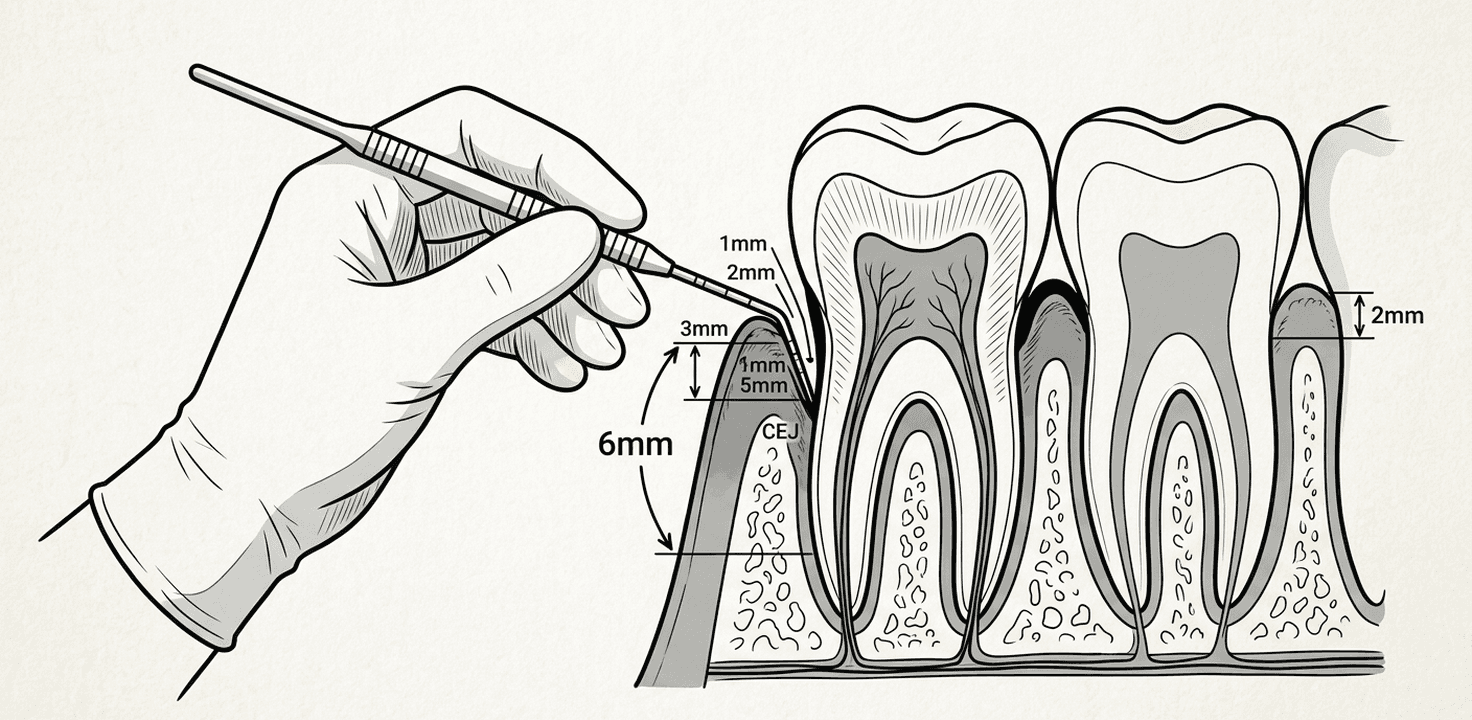
Periodontal Disease Classification 2017 World Workshop: A Clinical Implementation Guide
The 2017 World Workshop on the Classification of Periodontal and Peri-Implant Diseases and Conditions represents one of the most significant paradigm shifts in periodontal diagnosis since the 1999 classification. Co-presented by the American Academy of Periodontology (AAP) and the European Federation of Periodontology (EFP), this evidence-based framework introduces a multidimensional staging and grading system that transforms how dental professionals diagnose, communicate, and treat periodontal disease.
Understanding and implementing this classification correctly is essential for every dental practice. Research published in the Journal of Periodontology demonstrates that accurate staging and grading directly influences treatment outcomes, patient prognosis, and long-term tooth retention rates.
The Rationale Behind the 2017 Classification Update
Problems with the 1999 Classification
The previous 1999 Armitage classification, while revolutionary in its time, presented several critical limitations that affected clinical practice:
- Overlapping categories: The distinction between "chronic" and "aggressive" periodontitis lacked strong biological evidence, creating confusion in diagnosis and treatment planning
- One-dimensional severity assessment: Classification based solely on severity (slight, moderate, severe) failed to capture the biological complexity of periodontal diseases
- Inconsistent implementation: The severity-only approach allowed for fragmented diagnoses across different areas of the mouth, complicating comprehensive treatment planning
- Limited prognostic information: The 1999 system provided minimal insight into disease progression rates or risk factors
As research from the 2017 World Workshop proceedings notes: "A diagnosis based on severity alone represents a one-dimensional view of a complex disease." The new classification addresses these limitations by incorporating severity, complexity, extent, and biological behavior into a comprehensive diagnostic framework.
Understanding Periodontal Stages: From I to IV
Staging in the 2017 classification serves as the primary framework for classifying periodontitis severity and complexity. Unlike the 1999 system, staging applies to the entire dentition, not individual sites or quadrants.
Stage I Periodontitis (Initial Periodontitis)
Severity Criteria:
- Interdental clinical attachment loss (CAL): 1-2 mm at the site of greatest loss
- Radiographic bone loss (RBL): Less than 15% of root length (coronal third)
- No tooth loss due to periodontitis
Complexity Factors:
- Maximum probing depth ≤4 mm
- Mostly horizontal bone loss
- No furcation involvement
Clinical Interpretation: Stage I represents early periodontal destruction with minimal tissue damage. The disease is still highly manageable with non-surgical periodontal therapy, and the prognosis for long-term tooth retention is excellent.
Stage II Periodontitis (Moderate Periodontitis)
Severity Criteria:
- Interdental CAL: 3-4 mm at the site of greatest loss
- Radiographic bone loss: 15-33% of root length (coronal third)
- No tooth loss due to periodontitis
Complexity Factors:
- Maximum probing depth ≤5 mm
- Mostly horizontal bone loss
- Beginning infrabony defects may be present
Clinical Interpretation: Stage II indicates established periodontal destruction requiring comprehensive periodontal therapy. While the disease is still manageable with standard periodontal treatment, patients require more intensive management and closer monitoring than Stage I cases.
Stage III Periodontitis (Severe Periodontitis)
Severity Criteria:
- Interdental CAL: ≥5 mm at the site of greatest loss
- Radiographic bone loss: Extending to middle third of root and beyond
- Tooth loss due to periodontitis: ≤4 teeth
Complexity Factors:
- Probing depths ≥6 mm
- Vertical bone loss ≥3 mm
- Class II or III furcation involvement
- Moderate ridge defects
Clinical Interpretation: Stage III represents severe periodontal disease with significant tissue destruction. These cases often require advanced surgical interventions, regenerative procedures, and complex restorative considerations. The prognosis is guarded to fair, and multidisciplinary treatment planning is frequently necessary.
Stage IV Periodontitis (Very Severe Periodontitis)
Severity Criteria:
- Interdental CAL: ≥5 mm at the site of greatest loss
- Radiographic bone loss: Extending to middle third of root and beyond
- Tooth loss due to periodontitis: ≥5 teeth
Complexity Factors:
- Need for complex rehabilitation including:
- Masticatory dysfunction
- Secondary occlusal trauma (tooth mobility degree ≥2)
- Severe ridge defects
- Bite collapse, drifting, or flaring
- Less than 20 remaining teeth (10 opposing pairs)
Clinical Interpretation: Stage IV represents the most complex periodontal cases requiring comprehensive rehabilitation. These patients face significant challenges with masticatory function and often need extensive interdisciplinary treatment involving periodontics, prosthodontics, and orthodontics. The prognosis varies considerably based on remaining periodontal support and patient compliance.
The Grading System: Predicting Disease Progression
While staging describes the current state of periodontal disease, grading provides critical prognostic information about the biological behavior of the disease and expected treatment response.
Grade A: Slow Rate of Progression
Primary Criteria (Direct Evidence):
- No progression of radiographic bone loss or CAL over 5 years
Indirect Evidence:
- % bone loss / age ratio: < 0.25
- Heavy biofilm deposits with low levels of destruction
Grade Modifiers:
- Non-smoker
- Normoglycemic (no diabetes diagnosis)
Clinical Significance: Grade A patients demonstrate exceptional periodontal stability despite bacterial challenge. Their immune response effectively controls periodontal destruction, and standard periodontal maintenance protocols typically yield excellent long-term outcomes.
Grade B: Moderate Rate of Progression (Default Grade)
Primary Criteria (Direct Evidence):
- < 2 mm progression of CAL or bone loss over 5 years
Indirect Evidence:
- % bone loss / age ratio: 0.25 to 1.0
- Destruction commensurate with biofilm deposits
Grade Modifiers:
- Smoking < 10 cigarettes/day
- HbA1c < 7.0% in patients with diabetes
Clinical Significance: Grade B represents the majority of periodontal patients. The moderate progression rate aligns with expected outcomes from standard periodontal therapy. Clinicians should initially assume Grade B and seek specific evidence to shift to Grade A or C.
Grade C: Rapid Rate of Progression
Primary Criteria (Direct Evidence):
- ≥2 mm progression of CAL or bone loss over 5 years
Indirect Evidence:
- % bone loss / age ratio: >1.0
- Destruction exceeds expectations given biofilm deposits; specific clinical patterns suggestive of periods of rapid progression
Grade Modifiers:
- Smoking ≥10 cigarettes/day
- HbA1c ≥7.0% in patients with diabetes
Clinical Significance: Grade C patients face significantly elevated risk for continued periodontal destruction despite appropriate therapy. These cases require intensive maintenance protocols, frequent re-evaluation, and aggressive management of modifiable risk factors.
Determining Extent and Distribution
The 2017 classification requires clinicians to specify disease extent as a descriptor following the stage:
Localized Periodontitis
- Less than 30% of teeth are involved
- Typically affects specific tooth types or regions
Generalized Periodontitis
- More than 30% of teeth are involved
- Widespread destruction across the dentition
Molar/Incisor Pattern
- First molars and/or incisors primarily affected
- May represent aggressive periodontitis patterns
- Requires specific clinical consideration and family history evaluation
Important Note: Unlike severity-based classifications, staging cannot be subdivided into different levels for different areas of the mouth. The stage reflects the most severe areas of destruction while the extent descriptor indicates the distribution pattern.
Clinical Implementation: A Step-by-Step Approach
Step 1: Initial Case Overview and Screening
Begin with comprehensive data collection:
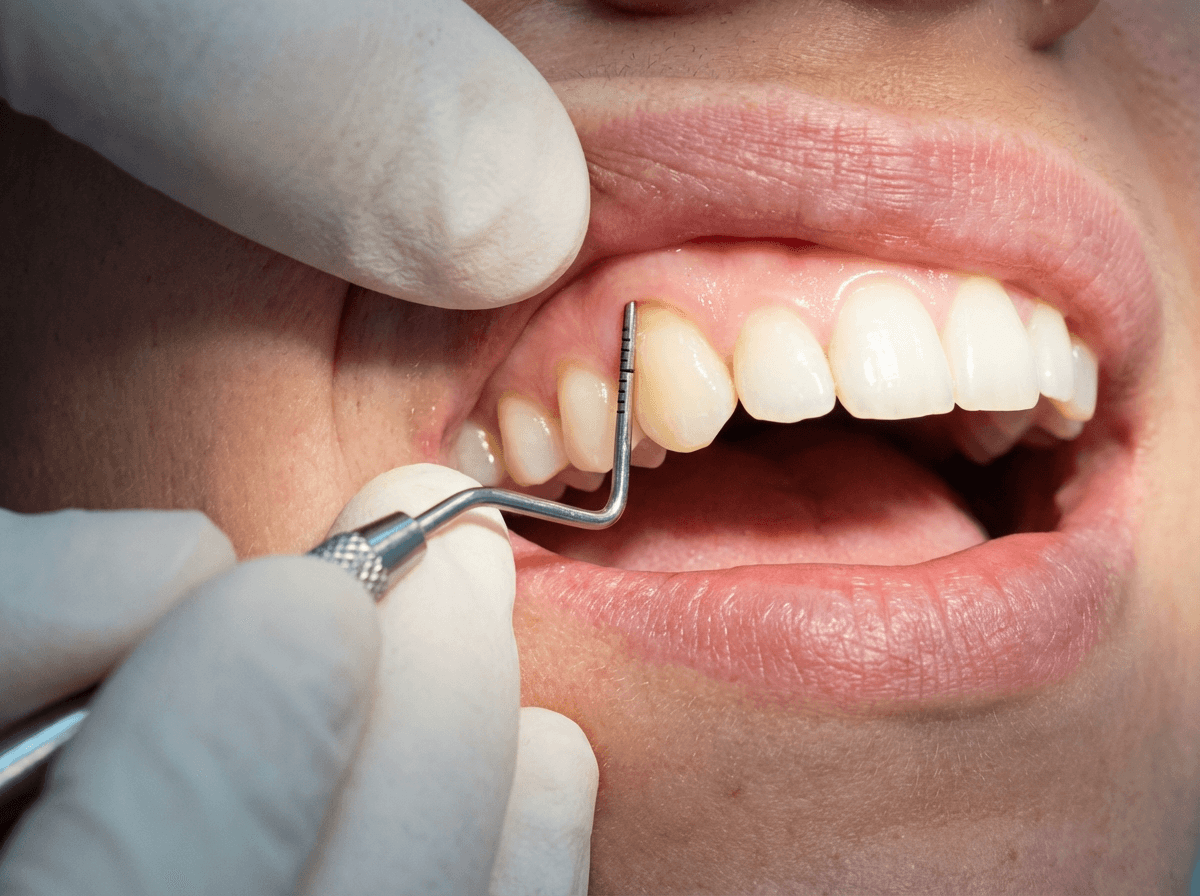
- Full mouth periodontal charting: Record probing depths, recession, and bleeding on probing at six sites per tooth
- Full mouth radiographic examination: Bitewings and periapicals, or panoramic radiograph supplemented with targeted periapicals
- Missing teeth documentation: Identify teeth lost due to periodontitis versus other causes
- Risk factor assessment: Document smoking status, diabetes control, and other systemic conditions
Research published in Cureus analyzing 4,993 patient records confirms that this initial screening efficiently categorizes most patients into appropriate stages. Patients with PSR (Periodontal Screening and Recording) scores of 3 and 4 typically correspond to periodontitis cases requiring further classification.
Step 2: Establish the Stage
- Determine maximum CAL or radiographic bone loss: Identify the site with the greatest attachment loss
- Assess tooth loss due to periodontitis: Include teeth planned for extraction due to periodontal destruction
- Evaluate complexity factors: Check for vertical defects, furcation involvement, and tooth mobility
- Apply the complexity rule: If one or more complexity factors are present, shift to a higher stage
Key Clinical Tip: When CAL is not available, radiographic bone loss can substitute for initial staging assessment. However, CAL remains the preferred criterion when documented.
Step 3: Establish the Grade
- Calculate indirect evidence: Use the formula: (% bone loss divided by age) to estimate progression rate
- Assess risk factors: Document smoking status and diabetes control (HbA1c when available)
- Evaluate the case phenotype: Compare destruction level to biofilm deposits
- Review historical data: When available, compare current radiographs to historical images for direct evidence of progression
Clinical Algorithm:
- Start with Grade B (moderate progression)
- Shift to Grade A if: non-smoker, normoglycemic, low biofilm deposits relative to destruction, or documented stability over 5+ years
- Shift to Grade C if: heavy smoker, uncontrolled diabetes, destruction exceeding biofilm deposits, or documented rapid progression
Step 4: Document the Complete Diagnosis
Present the diagnosis in the standardized format:
Example: "Generalized Stage III Grade C Periodontitis"
This diagnostic format immediately communicates:
- Extent: Generalized (>30% of teeth affected)
- Stage: III (severe periodontitis requiring complex treatment)
- Grade: C (rapid progression expected without intervention)
Major Changes from the 1999 Classification
Elimination of "Chronic" vs. "Aggressive" Periodontitis
The 2017 classification consolidates these categories under the single term "periodontitis" because:
- Lack of distinct biological evidence supporting separate disease entities
- Similar microbiological profiles across disease manifestations
- Staging and grading provide more clinically relevant information than historical onset age
As noted by periodontal researchers: "The 2017 classification system has withdrawn the distinction between chronic and aggressive periodontitis as there were not many biological studies to support both of these conditions as separate entities."
Introduction of Clinical Gingival Health Definition
For the first time, the classification explicitly defines clinical gingival health:
- Clinical health on intact periodontium: No attachment loss, no bleeding on probing, minimal inflammation
- Clinical health on reduced periodontium: History of periodontal disease or non-periodontal attachment loss, but currently stable with no inflammation
This paradigm shift establishes clear treatment outcome goals and enables precise monitoring of treatment success.
New Peri-Implant Disease Classification
The 2017 Workshop introduced the inaugural classification for peri-implant conditions:
- Peri-implant health: Absence of inflammation, no bleeding on probing, no bone loss beyond crestal remodeling
- Peri-implant mucositis: Reversible inflammatory lesion of surrounding soft tissues without bone loss
- Peri-implantitis: Inflammatory disease affecting hard and soft tissues with progressive bone loss
This expansion recognizes the growing importance of implant dentistry and provides standardized diagnostic criteria for implant complications.
Practical Challenges and Solutions
Challenge: Grade Determination Without Historical Radiographs
Solution: Use the % bone loss/age calculation as a screening tool, supplemented by clinical judgment on biofilm-to-destruction ratios. When uncertainty exists, default to Grade B and re-evaluate after initial therapy response.
Challenge: Differentiating Stage III and IV
Solution: Focus on masticatory dysfunction and the need for complex rehabilitation. Stage IV cases typically require pre-prosthodontic periodontal management and have significant functional implications beyond tooth loss alone.
Challenge: Patient Communication of Complex Diagnosis
Solution: Translate the technical diagnosis into prognostic language patients understand:
- "Your periodontal disease is Stage III, meaning significant bone loss has occurred"
- "The Grade C designation tells us the disease progresses quickly without treatment, making consistent care essential"
- "Localized means we caught this early in terms of how many teeth are affected"
Treatment Planning Implications
The staging and grading system directly influences evidence-based treatment planning:
Stage-Based Treatment Considerations
Stage I: Non-surgical periodontal therapy (scaling and root planing) with 3-month recall intervals
Stage II: Comprehensive non-surgical therapy with possible limited surgical intervention; 3-month maintenance
Stage III: Surgical periodontal therapy including regenerative procedures; multidisciplinary consultation often required; 3-month maintenance with close monitoring
Stage IV: Complex surgical and regenerative therapy; prosthodontic and restorative coordination essential; often requires periodontal maintenance every 2-3 months
Grade-Based Modification Strategies
Grade A: Standard maintenance intervals, emphasis on prevention and monitoring
Grade B: Standard therapy with risk factor modification; re-evaluate progression annually
Grade C: Intensive maintenance (every 2-3 months), aggressive risk factor management, early referral for uncontrolled systemic conditions, extended antibiotic protocols when indicated
Validation and Clinical Research
Multiple validation studies support the clinical utility of the 2017 classification:
- Diagnostic accuracy: A study comparing periodontists, postgraduate students, general dentists, and undergraduate students found substantial agreement for stage determination (ICC = 0.658) and moderate agreement for grade (ICC = 0.518)
- Prognostic value: Research demonstrates that staging and grading accurately predict tooth loss during maintenance therapy
- Treatment outcome correlation: Studies confirm that Stage III and IV cases with Grade C progression show poorer responses to standard therapy, validating the need for modified treatment protocols
As research in Cureus notes: "The implementation of the new classification system in routine dental practice has been readily accepted by clinicians. Staging and grading system of classification helps in assessing the severity, extent, and progression of disease."
Documentation and Coding Considerations
Clinical Documentation Best Practices
- Record the complete diagnosis: extent + stage + grade + "periodontitis"
- Document all staging criteria: CAL measurements, RBL percentages, tooth loss history
- Document grading evidence: smoking status, diabetes control, progression calculations
- Include complexity factors that influenced stage determination
- Photograph and radiograph maximum defect sites for comparison
Insurance and Coding Implications
While dental insurance coding systems continue to evolve, most carriers recognize:
- D4910 (Periodontal Maintenance) for all stages following active therapy
- D4341/D4342 (Periodontal Scaling and Root Planing) for initial therapy across all stages
- Surgical codes based on procedure type rather than stage
The staging and grading system primarily serves clinical decision-making rather than insurance authorization, though it provides excellent documentation support for case complexity.
Conclusion: Embracing Precision Periodontology
The 2017 World Workshop classification represents a fundamental shift toward precision medicine in periodontology. By staging disease severity and complexity while grading biological behavior and risk, clinicians can:
- Develop individualized treatment plans based on both current disease state and expected progression
- Communicate more effectively with patients about their condition and prognosis
- Establish evidence-based maintenance protocols tailored to risk profiles
- Identify cases requiring specialist referral or interdisciplinary management
- Track treatment outcomes against expected benchmarks for each stage and grade
The multidimensional approach moves periodontal care beyond simple disease description toward personalized, predictive, and preventive management. As the AAP and EFP emphasized in their consensus reports, this classification "represents a first step towards adoption of precision medicine concepts to the management of periodontitis."
For dental professionals, mastering the 2017 classification is no longer optional—it is essential for delivering optimal periodontal care in the modern evidence-based practice. The framework provides the structure necessary for implementing biomarkers in diagnosis and prognosis while ensuring that every patient receives treatment calibrated to their specific disease severity, biological behavior, and individual risk factors.
By embracing this comprehensive staging and grading system, clinicians position themselves to achieve the ultimate goal of periodontal therapy: preserving natural dentition through early detection, accurate diagnosis, and personalized treatment planning that addresses both the disease present today and the risks it poses for tomorrow.
References:
-
Tonetti MS, Greenwell H, Kornman KS. Staging and grading of periodontitis: Framework and proposal of a new classification and case definition. J Periodontol. 2018;89(Suppl 1):S159-S172.
-
Chapple ILC, Mealey BL, Van Dyke TE, et al. Periodontal health and gingival diseases and conditions on an intact and a reduced periodontium: Consensus report of workgroup 1 of the 2017 World Workshop on the Classification of Periodontal and Peri-Implant Diseases and Conditions. J Periodontol. 2018;89(Suppl 1):S68-S77.
-
Jepsen S, Caton JG, Albandar JM, et al. Periodontal manifestations of systemic diseases and developmental and acquired conditions: Consensus report of workgroup 3 of the 2017 World Workshop on the Classification of Periodontal and Peri-Implant Diseases and Conditions. J Periodontol. 2018;89(Suppl 1):S237-S248.
-
Fageeh HI, Fageeh HN, et al. Accuracy in Diagnosing Periodontitis Using the AAP/EFP 2017 Classification. Cureus. 2025;17(1).
-
Raza S, et al. Clinical Incorporation of the 2017 Classification of Periodontal Diseased Conditions: Part I (Diagnosis of Periodontitis Involving Data From 4,993 Patients). Cureus. 2024;16(6).
-
Sanz M, et al. What have we learned since the 2018 classification of periodontal diseases? EFP Publications. 2025.
-
Caton JG, Armitage G, Berglundh T, et al. A new classification scheme for periodontal and peri-implant diseases and conditions. J Periodontol. 2018;89(Suppl 1):S1-S8.