
Sleep Apnea Screening in Dental Practice: A Comprehensive Guide for Dentists
Sleep apnea is a prevalent yet significantly underdiagnosed condition affecting millions of people worldwide. While traditionally associated with sleep medicine specialists, dentists are increasingly recognized as essential frontline healthcare providers capable of identifying early signs of obstructive sleep apnea (OSA) during routine dental examinations. This comprehensive guide explores the critical role dental professionals play in sleep apnea screening, examination techniques, and collaborative care approaches that can save lives and improve patient outcomes.
Understanding Sleep Apnea and Its Impact
What is Obstructive Sleep Apnea?
Obstructive sleep apnea is a serious sleep disorder characterized by repeated episodes of complete or partial obstruction of the upper airway during sleep. These obstructions cause breathing to stop momentarily, leading to fragmented sleep patterns and decreased oxygen saturation levels. The condition affects approximately 1 billion adults globally, with prevalence rates ranging from 10% to 30% depending on age, gender, and geographic location.
The consequences of untreated sleep apnea extend far beyond poor sleep quality. Research has established strong correlations between OSA and numerous systemic health conditions, including hypertension, cardiovascular disease, type 2 diabetes, stroke, and cognitive impairment. Additionally, sleep apnea significantly impacts quality of life, contributing to daytime fatigue, decreased productivity, depression, and increased risk of motor vehicle accidents.
Why Dental Professionals Are Uniquely Positioned
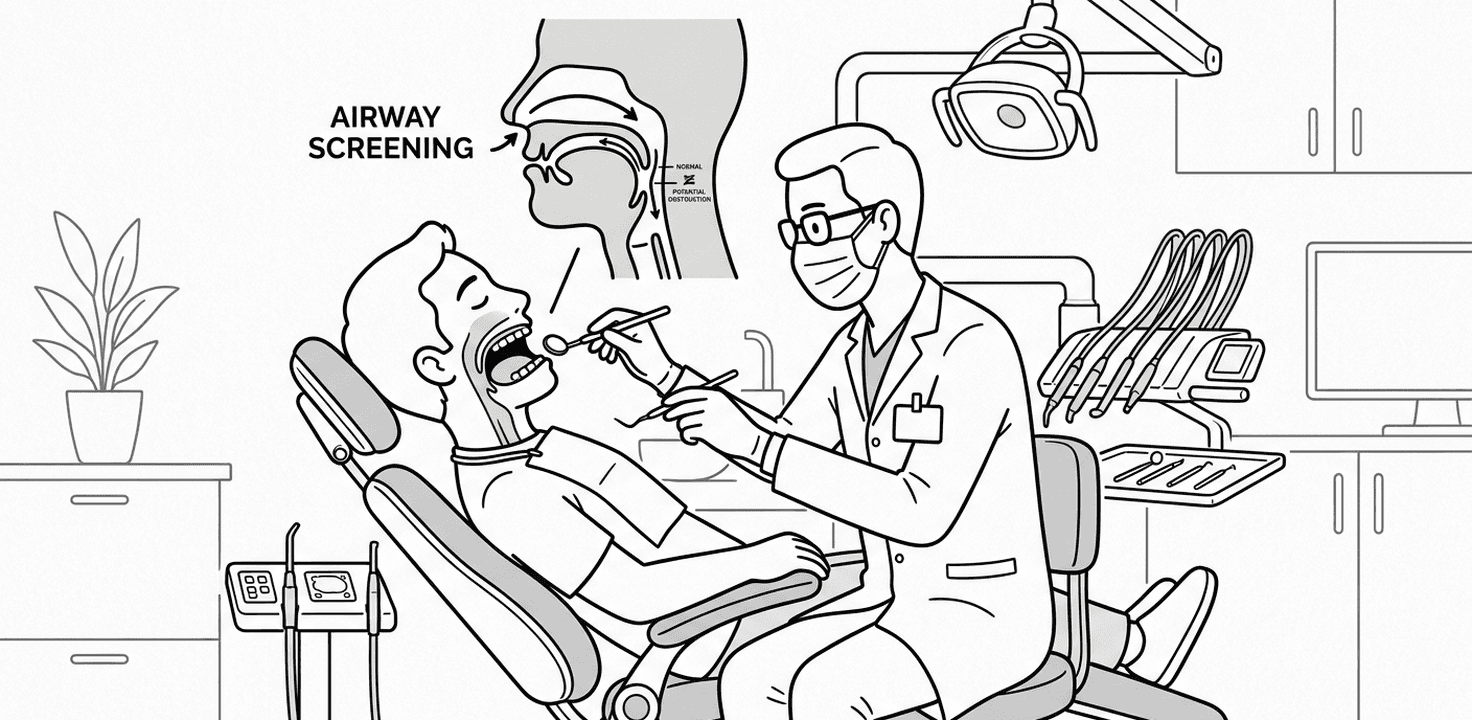
Dentists possess distinct advantages in identifying sleep apnea that other healthcare providers may lack. During routine dental examinations, practitioners have direct visual access to the oral cavity and surrounding structures that are intimately involved in upper airway anatomy. The dentist's chair provides an ideal vantage point for assessing anatomical features associated with airway obstruction, such as the size and position of the tongue, soft palate characteristics, and mandibular structure.
Furthermore, dental visits often occur more frequently than medical check-ups, with patients typically visiting their dentist every six months for preventive care. This regular contact creates multiple opportunities for screening and longitudinal monitoring. The established trust and rapport between dentists and their patients also facilitate open discussions about sleep-related symptoms and concerns.
Anatomical Considerations in Sleep Apnea
The Upper Airway and Oral Structures
The upper airway is a complex anatomical region comprising both rigid and collapsible structures. During sleep, muscle tone decreases throughout the body, including the muscles supporting the pharyngeal airway. This normal physiological change becomes problematic when anatomical restrictions or excessive tissue compromises the airway's patency.
Key oral and maxillofacial structures relevant to sleep apnea include:
The Soft Palate and Uvula: Elongated or thickened soft palates can narrow the retropalatal airway space. During sleep, these tissues may collapse posteriorly, obstructing airflow. Visual examination can reveal excessive tissue bulk, redness from chronic vibration (known as uvulitis), or alterations in normal architecture.
The Tongue: Tongue position and size play crucial roles in airway patency. Macroglossia (enlarged tongue) or a low-lying tongue posture can significantly reduce the retroglossal airway space. The Mallampati classification system, originally developed for anesthesiology, has been adapted for dental sleep medicine to assess tongue size relative to oropharyngeal visualization.
Tonsils and Adenoids: Although more commonly implicated in pediatric sleep apnea, enlarged tonsils can contribute to airway obstruction in adults as well. Tonsillar hypertrophy is graded on a scale from 0 to 4, with higher grades indicating greater potential for airway compromise.
The Mandible and Maxilla: Skeletal relationships influence airway dimensions. Retrognathic mandibles (recessed lower jaws) or maxillary constriction can reduce the bony framework supporting the airway, predisposing individuals to obstruction during sleep.
The Hyoid Bone Position: The hyoid bone serves as an attachment point for tongue musculature. Its position relative to the mandible influences tongue posture and stability. A low hyoid position may indicate decreased muscular support for the airway.
Dental Signs and Symptoms
Sleep apnea often manifests with detectable signs within the oral cavity that observant dentists can recognize:
Bruxism: Nocturnal teeth grinding has been strongly associated with sleep apnea. The prevailing theory suggests that jaw movements during bruxism episodes may represent a physiological response to airway obstruction, potentially serving as a protective mechanism to reopen the airway. Patients may present with worn occlusal surfaces, fractured restorations, or hypertrophied masseter muscles.
Scalloped Tongue: Tongue indentations along the lateral borders often result from the tongue pressing against the teeth during sleep. This finding suggests muscle compensation for airway obstruction and tongue positioning adjustments during sleep.
Erythematous Soft Palate and Uvula: Chronic vibration of soft tissues against each other during snoring and airway collapse can cause inflammation, visible as redness and swelling.
Torus Palatinus and Mandibularis: While bony exostoses have multiple etiologies, their presence may indicate long-term parafunctional habits potentially related to sleep-disordered breathing.
Periodontal Implications: Emerging research suggests potential associations between sleep apnea and periodontal disease, possibly mediated through inflammatory pathways and altered immune responses.
Screening Protocols and Assessment Tools
Patient History and Questionnaires
Effective sleep apnea screening begins with a thorough patient history that specifically addresses sleep-related symptoms. Standard dental intake forms should be modified to include screening questions targeting common OSA indicators.
The Epworth Sleepiness Scale (ESS) remains the most widely validated tool for assessing daytime sleepiness. Patients rate their likelihood of dozing in eight different situations, with scores above 10 indicating abnormal sleepiness warranting further investigation.
The STOP-BANG questionnaire offers high sensitivity for detecting moderate to severe OSA and has been validated across multiple populations. This eight-item assessment evaluates:
- Snoring
- Tiredness during daytime
- Observed apnea episodes
- Pressure (high blood pressure)
- BMI (body mass index)
- Age
- Neck circumference
- Gender
A score of 5-8 indicates high probability of moderate to severe OSA, while 3-4 suggests intermediate risk.
The Berlin Questionnaire categorizes patients into high or low risk based on three symptom categories: snoring and witnessed apneas, daytime sleepiness, and hypertension/obesity. This questionnaire has demonstrated sensitivity exceeding 80% in primary care settings.
Dental-specific screening tools have also been developed, incorporating questions about bruxism, morning headaches, and dry mouth—symptoms frequently reported by patients with sleep-disordered breathing.
Clinical Examination Techniques
Beyond questionnaires, systematic clinical examination significantly enhances screening accuracy:
Mallampati Classification: Patients are asked to open their mouth fully and protrude their tongue without phonating. The visibility of oropharyngeal structures is graded from Class I (complete visualization of soft palate, uvula, and pillars) to Class IV (hard palate only visible). Classes III and IV correlate with increased OSA risk.
Neck Circumference Measurement: Neck circumference exceeding 17 inches in men or 16 inches in women increases OSA risk. This measurement should be taken at the level of the cricothyroid membrane.
Nasal Breathing Assessment: Evaluation of nasal patency through airflow perception, nasal valve examination, and observation for external nasal deformities identifies potential contributors to mouth breathing and airway obstruction.
Temporomandibular Joint and Masticatory Muscle Evaluation: Patients with sleep apnea often exhibit signs of parafunctional habits. Palpation of the TMJ and masticatory muscles may reveal tenderness, clicking, or limited range of motion.
Occlusal Analysis: Examination for signs of bruxism, including wear facets, crack lines tooth mobility, and hypertrophied musculature, provides additional clues to underlying sleep-disordered breathing.
Diagnostic Technologies in Dental Practice
Advances in diagnostic technology have expanded dentists' capabilities in sleep-related breathing disorder assessment:
Cone Beam Computed Tomography (CBCT): Three-dimensional imaging allows precise airway volumetric analysis. CBCT can identify sites of constriction, measure airway cross-sectional areas, and assess craniofacial skeletal relationships contributing to airway compromise.
Acoustic Pharyngometry: This non-invasive technique uses sound waves to measure cross-sectional airway areas at various pharyngeal levels. It provides objective data on airway dimensions and collapsibility.
Rhomanometry: Measurement of nasal airflow resistance helps identify nasal obstruction contributing to sleep-disordered breathing.
Home Sleep Apnea Testing (HSAT): Some dental practices offer home sleep testing as a convenient, cost-effective alternative to in-laboratory polysomnography. While not appropriate for all patients, HSAT effectively diagnoses uncomplicated moderate to severe OSA in selected individuals.
Collaborative Care Models
The Physician-Dentist Partnership
Effective sleep apnea management requires collaborative care between dental and medical professionals. Dentists must recognize their role as screening and treatment providers while respecting the physician's position as the definitive diagnostician and coordinator of comprehensive care.
The optimal care pathway typically involves:
- Screening and Referral: Dentists identify at-risk patients and refer them for medical evaluation and formal diagnosis
- Diagnosis: Sleep medicine physicians conduct polysomnography or appropriate alternative testing to confirm OSA and determine severity
- Treatment Planning: Physicians and dentists collaborate to determine the most appropriate treatment approach based on severity, patient preferences, and anatomical factors
- Treatment Implementation: Depending on the plan, dentists may provide oral appliance therapy, surgical interventions, or adjunctive treatments
- Follow-up and Monitoring: Both providers track treatment outcomes, side effects, and compliance, adjusting approaches as necessary
Oral Appliance Therapy
For patients with mild to moderate OSA or those intolerant of continuous positive airway pressure (CPAP), mandibular advancement devices (MADs) represent an effective treatment alternative. These custom-fabricated oral appliances advance the mandible, thereby pulling the tongue forward and opening the airway space.
Successful oral appliance therapy requires:
- Comprehensive dental evaluation ensuring adequate periodontal support and restorations
- Precise impression and bite registration procedures
- Proper device selection considering adjustability and patient-specific anatomical factors
- Systematic titration protocols to achieve optimal mandibular advancement
- Regular follow-up appointments assessing treatment efficacy, side effects, and device condition
Dentists providing oral appliance therapy must obtain appropriate training, credentialing, and maintain ongoing education in sleep medicine principles.
Multi-Disciplinary Approach
Complex sleep apnea cases often benefit from multi-disciplinary collaboration involving:
- Otolaryngologists for surgical evaluation of upper airway obstruction
- Orthodontists for maxillary expansion or orthognathic surgical planning
- Myofunctional therapists for exercises improving tongue posture and muscle function
- Nutritionists for weight management interventions
- Psychologists for behavioral interventions affecting sleep hygiene
Implementation in Dental Practice
Developing Screening Protocols
Integrating sleep apnea screening into routine dental practice requires systematic protocol development:
- Staff Training: All team members should understand sleep apnea basics, screening questions, and appropriate patient communication strategies
- Documentation: Electronic health records should include sleep-specific templates for risk assessment and examination findings
- Referral Networks: Establish relationships with local sleep medicine physicians and coordinate referral processes
- Patient Education: Develop educational materials explaining the oral-systemic connections and the dentist's role in sleep health
- Follow-up Systems: Create mechanisms for tracking referred patients and ensuring appropriate care continuation
Legal and Ethical Considerations
Dental professionals must navigate several legal and ethical considerations:
- Scope of Practice: Dentists should avoid diagnosing sleep apnea definitively without appropriate medical consultation and diagnostic testing
- Informed Consent: Patients must understand the screening nature of dental assessments and the necessity of medical follow-up for diagnosis
- Documentation: Thorough documentation of screening results, conversations, and referrals protects both patient and provider
- Practice Standards: Dentists providing oral appliance therapy should meet recognized credentialing requirements and follow established clinical guidelines
Case Studies and Clinical Applications
Case Study 1: The Chronic Bruxer
A 52-year-old male presented with severely worn dentition requiring full-mouth rehabilitation. During examination, the dentist observed a scalloped tongue, Class IV Mallampati score, and reported loud snoring. The patient completed the STOP-BANG questionnaire, scoring 6 (high risk). Referral to a sleep medicine physician confirmed moderate OSA (AHI 18). Following CPAP therapy initiation and resolution of OSA symptoms, the dentist proceeded with restorative treatment using materials appropriate for reduced functional loads. Without sleep apnea identification, the exquisite restorations would have been at high risk of failure from ongoing parafunctional activity.
Case Study 2: The Pediatric Patient
A 9-year-old female presented for routine examination with a history of excessive daytime sleepiness and difficulty concentrating at school. Intraoral examination revealed significant tonsillar hypertrophy (Grade 4), crossbite, and high-arched palate. The parents reported frequent bedwetting and witnessed breathing pauses during sleep. Prompt referral to pediatric otolaryngology resulted in tonsillectomy and adenoidectomy. Post-surgical follow-up showed dramatic improvement in sleep quality, academic performance, and oral breathing patterns. Early intervention prevented potential craniofacial growth disturbances and behavioral complications.
Case Study 3: The CPAP-Intolerant Patient
A 65-year-old male with severe OSA (AHI 45) was referred by his sleep physician after repeated attempts at CPAP therapy failed due to claustrophobia and mask intolerance. Comprehensive dental evaluation revealed appropriate dentition for oral appliance therapy. A custom mandibular advancement device was fabricated and titrated over six weeks to achieve optimal therapeutic position. Follow-up sleep study demonstrated AHI reduction to 8, and the patient reported substantial improvement in daytime functioning. The dentist worked closely with the referring physician, providing regular progress reports and collaborating on long-term management.
Future Directions in Dental Sleep Medicine
Technological Innovations
The field continues to evolve rapidly with technological advances:
- Artificial Intelligence: Machine learning algorithms applied to imaging and electronic health data may enhance screening accuracy
- Wearable Devices: Consumer-grade sleep monitors provide increasingly sophisticated data on sleep quality and potential breathing disruptions
- Smart Oral Appliances: Devices incorporating sensors monitoring adherence, positioning, and physiological parameters optimize treatment outcomes
- Digital Workflows: Intraoral scanning and 3D printing streamline oral appliance fabrication processes
Research Frontiers
Ongoing investigations explore:
- Optimal screening protocols for specific populations, including children, pregnant women, and post-menopausal females
- Biomarkers for OSA identification in saliva and other oral fluids
- Genetic factors influencing treatment response to oral appliances
- Long-term outcomes of pediatric interventions on adult sleep and craniofacial development
Conclusion
Sleep apnea screening represents a natural expansion of the dental professional's role in comprehensive health care. With appropriate training, systematic protocols, and collaborative relationships with medical colleagues, dentists can significantly impact the identification and management of this prevalent, underdiagnosed condition.
The dental profession's unique access to anatomical structures, frequent patient contact, and established trust positions practitioners as essential contributors to sleep health. By integrating screening into routine practice, dentists fulfill their expanding responsibilities in systemic health while providing valuable services that may quite literally save patients' lives.
As recognition grows regarding the oral-systemic health connections, sleep medicine will undoubtedly become an integral component of dental education and clinical practice. Dental professionals who embrace this evolution will enhance their practices, improve patient outcomes, and contribute meaningfully to population health.
The future of dentistry encompasses not only oral health but also the recognition that the mouth is a window to overall wellness. Sleep apnea screening exemplifies this paradigm shift, transforming routine dental visits into opportunities for comprehensive health assessment and intervention.